

DISC Profiles for New Zealand
What a DISC Profile Tells You
A DISC profile identifies your preferred behavioural style — how you communicate, make decisions, respond to challenge, and work with others. It takes 15–20 minutes to complete online and produces a comprehensive, personalised report that is immediately useful at work.
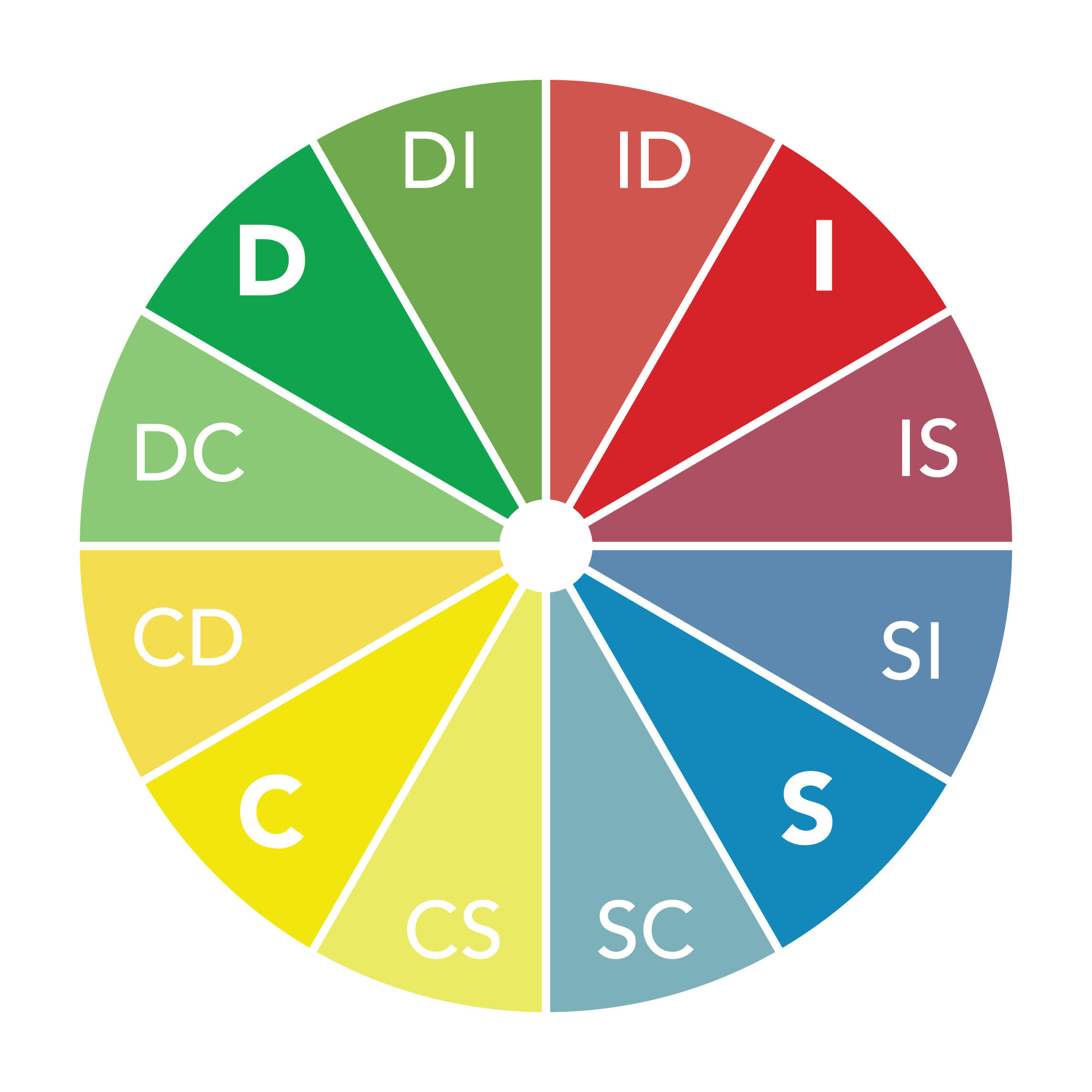
Each DISC profile is built around four core behavioural dimensions: Dominance (D), Influence (I), Steadiness (S), and Conscientiousness (C). Most people are a blend of two or more — there are 12 recognised DISC styles in total, each a distinct combination of these four traits.
When you know your DISC profile — and your team knows theirs — the way you work together changes. Communication becomes more deliberate, friction gets named rather than felt, and collaboration improves in ways that are visible and measurable.
Find out more about what a DISC assessment is.

The 12 DISC Styles are combinations of the four core traits—Dominance (D), Influence (I), Steadiness (S), and Conscientiousness (C). As well as these four, there are eight combination types: DI, ID, IS, SI, SC, CS, CD, and DC.
Each DISC personality type identifies natural or preferred behaviours. For example, DI are results-driven and persuasive, IS people are sociable and reliable, and CS people are methodical and dependable.
By providing tools to help integrate diverse approaches to working these 12 styles help individuals, teams and organisations improve collaboration, communication, teamwork, leadership and productivity.
How getting a DISC Profile Works
The DISC profile is delivered through a 15–20 minute online assessment. An algorithm analyses your responses and identifies your DISC style from one of 12 behavioural styles. There are no right or wrong answers or better or worse styles — the profile simply reflects how you prefer to behave at work.
Your personalised report explains your DISC style in plain language: how you like to work, what motivates you, how you respond under pressure, and how to communicate more effectively with people whose styles differ from yours. Most people find it immediately recognisable and directly applicable.
For a deeper look at how DISC works see our Introduction to DISC or learn more about an actual DISC Report.
Dominance ('D') – behaviour that is assertive, goal-oriented, and seeks to be in control of situations.
Influence ('I') - behaviour that is people-focused and enthusiastic about connecting and working with others.
Steadiness ('S') - behaviour that is calm, consistent, relationship-centric and reliable.
Conscientiousness ('C') - behaviour that is detail-oriented and analytical, focused on getting things right.
Everyone has each of these four core behavioural types. It's their personal mix of these four personality characteristics that determines their personal DISC style from one of 12 different styles.
Each person receives a comprehensive, personalised description in their profile. The profile identifies and describes their DISC style and explains their preferred ways of working … how they like to do things at work. The profile also has easy-to-use guidance on how they can communicate and collaborate more productively with each of the other styles. You might say it helps them customise their working style to integrate better with other people.
When a person better understands themselves and others they see many ways they can do things a little differently. People can use DISC like this every day.
For a range of reasons from simplicity to usability DISC personality profiling is an effective workplace tool that HR managers and consultants often prefer over other tools.
The 12 DISC Profile Styles

How to Use Your DISC Profile
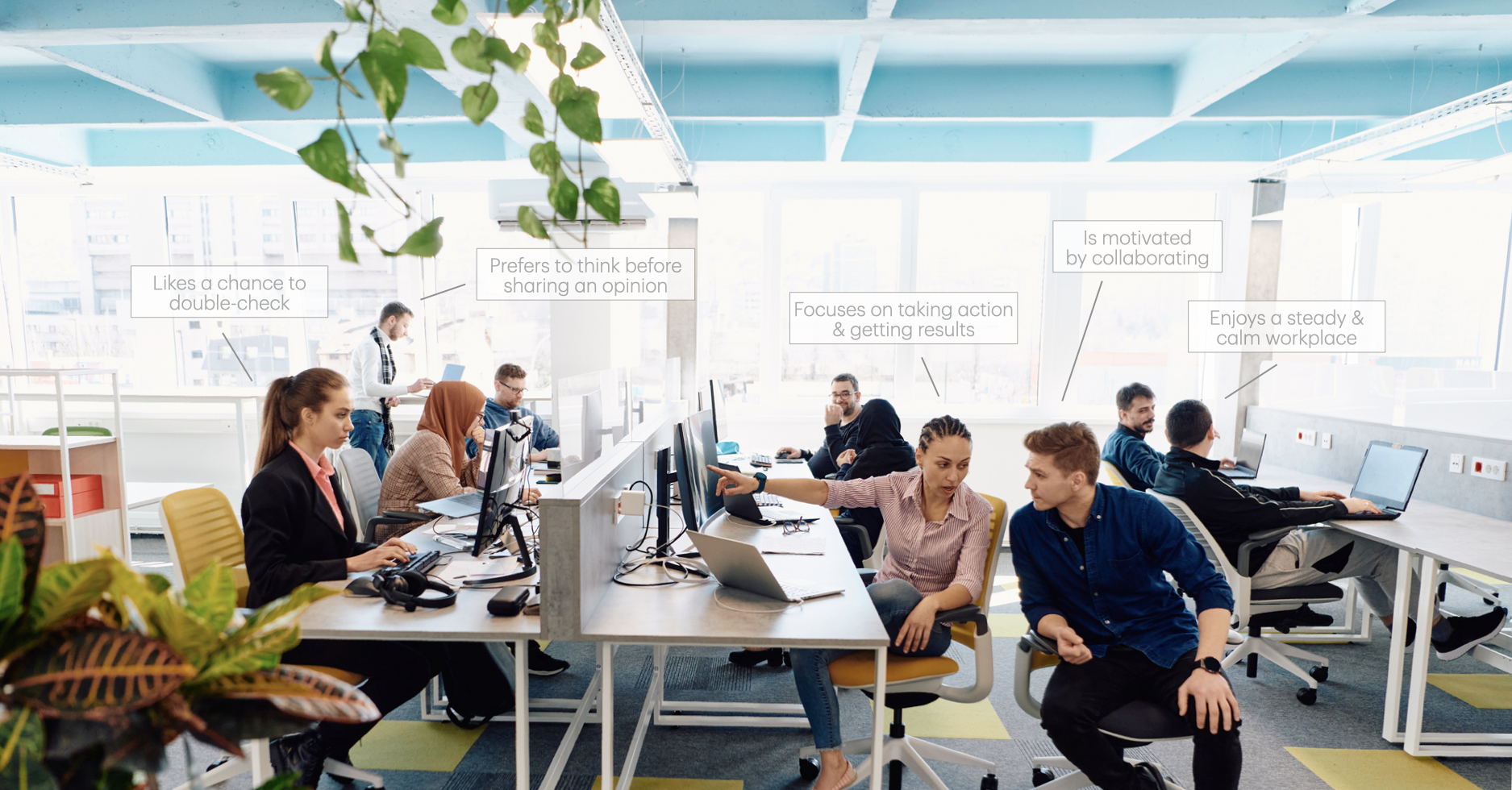
People work differently. Some prefer to analyse before acting; others decide quickly and adjust as they go. Neither is better — but the differences cause friction when they go unnamed.
A DISC profile gives you an objective, behaviour-based framework for understanding those differences — your own and others'. It adds precision to the self-awareness most people already have, and gives you a common language to use with your team.
When you know how and when a behaviour is a strength — or a limitation — you can make small, deliberate adjustments that make a real difference. Customer-facing roles find this particularly useful: your DISC profile includes specific guidance for connecting more effectively with different behavioural styles.
How DISC Builds Teams
Most teams don't struggle because people lack skill — they struggle because people communicate and collaborate differently and don't realise the impact that has. DISC gives teams a shared language for those differences.
When a team understands each other's DISC styles, practical things change: meetings run better, feedback lands more effectively, and friction that used to feel personal gets recognised as behavioural. A high-D colleague who seems blunt isn't being difficult — they're being efficient. A high-S team member who avoids conflict isn't being passive — they're preserving relationships. DISC makes these patterns visible and workable.
Teams that use DISC together typically see improvements in three areas: communication (people adjust how they deliver and receive information), collaboration (people understand who contributes what and why), and conflict resolution (people have a framework for navigating disagreement without it becoming personal).
For New Zealand teams, where directness isn't always the default, DISC is particularly useful — it gives people permission to have honest conversations about working styles without it feeling like criticism.
Learn more about how DISC builds teams.
DISC Assessments and Leadership
DISC profiling empowers leaders by increasing self-awareness and understanding of both their own behavioural style and those of people they lead.
When leaders and managers increase their self-awareness of their ways of working and how the people they lead work they become better at leading and managing. DISC Profiles help leaders to understand the people they lead, helping them hire, mentor, coach, influence and motivate their people more effectively.
The organisational benefits of more effective leadership are far-reaching. From attracting talent to building culture, productivity and profit, the whole organisation benefits.
How to Use DISC in New Zealand and Anywhere
Once a group have their DISC Profiles the idea is to use the insights and tips they provide in every day situations at work.
This means everyone needs to know their own profile and know or be able to easily check the DISC types of their co-workers.
Individually, DISC helps people adapt in small ways that improve communication. This means people will be better able to connect with and influence others.
DISC helps team-mates better understand how each tends to work and interact with others, which opens the door to smoother cooperation and more effective collaboration.
One of the ways DISC does this is by providing a common language. Teams that get comfortable with it quickly start saying things like, "That's quite 'D'.", or "That's my 'I' coming out."
When people develop a lasting behaviour that they are comfortable using it becomes part of how they work. In this way, DISC helps build culture and performance.
In NZ, we can be a little conflict averse. DISC is an easy-to-use tool for working out how to resolve difficulties with others. People who refer to their DISC profiles regularly learn how helpful it can be with different types of co-workers.
The Science Behind the Everything DiSC® Model
DISC is a scientifically validated behavioural assessment based on research by psychologist William Moulton Marston. It has strong construct, convergent, and discriminant validity — meaning it reliably measures intended traits and distinguishes between behavioural dimensions. Want to see how it works? See the DISC personality test.
More than 10 million people in over 150,000 organisations have used Everything DiSC. It is available in 22 languages across 72 countries, and more than a million people take it each year, making it the world's most widely used DISC assessment.
Why we use Wiley's Everything DiSC — the world's most researched DISC platform.
Frequently Asked Questions
What is a DISC profile?
A DISC profile is a personalised behavioural report produced from a 15–20 minute online assessment. It identifies your DISC style — your natural patterns of communication, decision-making, and working with others — across four dimensions: Dominance, Influence, Steadiness, and Conscientiousness. Each profile is unique to the individual and includes practical guidance for working more effectively with others.
How is a DISC profile used in the workplace?
DISC profiles are used by individuals, teams, and leaders across New Zealand to improve communication, reduce friction, and build more productive working relationships. The insights apply immediately — in meetings, one-on-one conversations, feedback situations, and daily collaboration. Teams that profile together develop a shared language for how they work, making difficult conversations easier and expectations clearer.
Is a DISC profile the same as a DISC personality test?
Yes — DISC profile and DISC personality test refer to the same tool. Read our full guide: take a DISC personality test.
What does "DISC profile" mean?
DISC stands for Dominance, Influence, Steadiness and Conscientiousness. A DISC profile is the report that shows where you sit across these four behavioural dimensions — your natural tendencies in how you act, communicate and respond at work.
Is The New Zealand DISC Profiling Hub an official DISC provider?
Yes. The New Zealand DISC Profiling Hub is an Everything DiSC Accredited Partner, licensed directly by Wiley to deliver official DISC assessments and certified facilitator-led training in New Zealand. This means every profile and workshop is backed by Wiley's validated DISC methodology and delivered by a recognised local partner, rather than an unlicensed or generic alternative.
